
Author: liveyourbiz

  • 5 Automation Tools That Turn Chaotic Workflows Into Revenue Machines

    5 Automation Tools That Turn Chaotic Workflows Into Revenue Machines

    5 Automation Tools That Turn Chaotic Workflows Into Revenue Machines

    Affiliate Disclosure: This post contains affiliate links to tools and services we believe can transform your business operations. When you make a purchase through these links, we may earn a commission at no additional cost to you. We only recommend tools we genuinely believe will help systemize your workflows and create more predictable revenue.

    The Breaking Point Every Entrepreneur Knows Too Well

    You’re answering client messages at midnight. Again. Your browser has seventeen tabs open, each one representing a different manual task you need to remember to complete. The proposal you promised to send by end of day is still sitting in your drafts folder because you got pulled into a scheduling nightmare with a new prospect. And somewhere in the back of your mind, that content calendar you meticulously planned three weeks ago is gathering digital dust because you simply don’t have the bandwidth to execute it.

    This isn’t just a busy season. This is your reality. Every. Single. Day.

    The irony cuts deep—you started this business to create freedom, but instead you’ve built yourself the most demanding job you’ve ever had. You’re not running your business anymore. You’re being run by it. And the worst part? You know that every hour you spend trapped in administrative quicksand is an hour you’re not spending on the strategic work that actually grows revenue.

    Here’s what nobody tells you when you’re bootstrapping your way to six figures: the same hustle that got you here will absolutely prevent you from getting there. The manual workflows that felt manageable at three clients become suffocating at ten. The “I’ll just handle this myself” mentality that saved money in year one becomes the ceiling that caps your growth in year two.

    But there’s a specific shift that separates entrepreneurs who stay stuck in the hustle from those who scale into sustainable revenue machines. It’s not about working harder. It’s not even about working smarter. It’s about fundamentally restructuring your role from operator to architect—from the person who drives the car to the person who builds the engine.

    The Mental Shift That Changes Everything

    Picture this scenario: imagine waking up tomorrow and discovering that your business ran perfectly for the past twenty-four hours without a single manual intervention from you. Client inquiries were captured and qualified. Appointments were scheduled and confirmed. Content was published. Follow-ups were sent. Your pipeline moved forward while you slept.

    For most entrepreneurs, this sounds like fantasy. But for those who’ve made the transition from reactive business owner to strategic CEO, this is simply Tuesday.

    The difference isn’t luck, team size, or budget. The difference is infrastructure. Specifically, the difference is choosing to invest in the systems that do the recurring work so you can focus on the creative, strategic, and relationship-building work that only you can do.

    This is where most business advice gets it backwards. We’re told to “systematize and delegate” as if those are interchangeable concepts. But delegation without systematization just means you’re managing someone else’s chaos instead of your own. Real leverage comes from building automated workflows first, then layering human expertise on top of those foundations.

    The transformation happens when you stop asking “Howdo I get this task done faster?” and start asking “How do I remove myself from this task entirely?” That single question shift is worth more than any productivity hack you’ll ever learn.

    The Strategic Stack: Five Tools That Work Together, Not Against Each Other

    Here’s the challenge with most automation conversations—they focus on individual tools solving individual problems. You end up with a technology Frankenstein: seventeen different platforms that don’t talk to each other, each requiring its own login, its own learning curve, its own monthly fee. You’ve automated the tasks but multiplied the complexity.

    The approach that actually transforms chaos into predictable revenue is different. It’s about building a cohesive system where each component handles a specific type of workflow chaos while integrating seamlessly with the others. Think of it less like collecting individual tools and more like assembling the essential infrastructure of a revenue-generating machine.

    The five tools we’re breaking down aren’t just random productivity apps on sale for Black Friday. They represent the core infrastructure pieces that address the five most common bottlenecks that keep coaches and entrepreneurs trapped in manual workflows. More importantly, they work synergistically—meaning the value of having all five is exponentially greater than having just one or two.

    Let’s break down exactly what each piece does and why it matters to your specific revenue goals.

    Robomotion RPA: The Heavy Lifting Your Brain Shouldn’t Be Doing
    Robomotion

    [Check out Robomotion RPA]

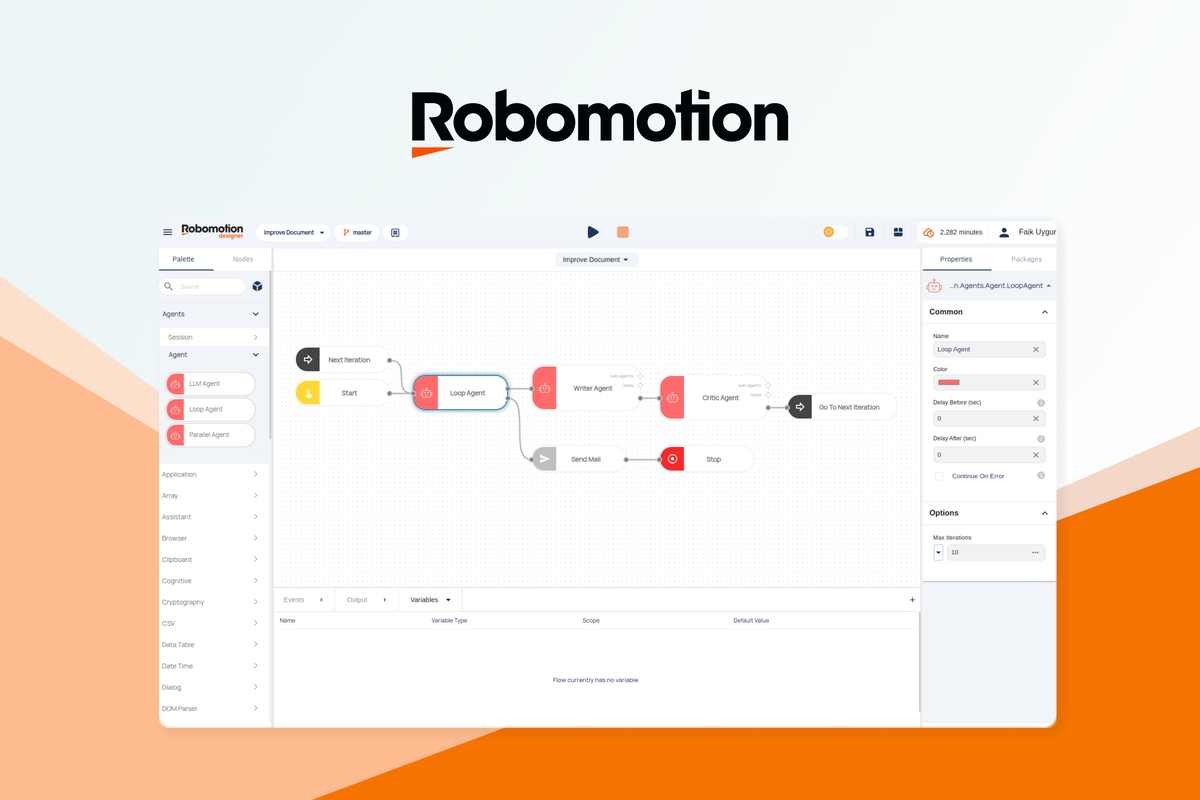
    Robotic Process Automation sounds technical because it is—but that’s precisely why it’s valuable. RPA handles the repetitive, multi-step digital tasks that eat up hours of your week without requiring any coding knowledge on your part. We’re talking about the kind of work that makes you feel busy without actually moving your business forward.

    Think about the last time you manually transferred data from one platform to another. Or copied information from emails into your CRM. Or downloaded reports from multiple sources to compile into a single dashboard. These tasks feel necessary because the information is important—but the manual execution is pure waste.

    This is where RPA becomes transformative rather than just convenient. It creates “digital workers” that handle these repetitive sequences exactly the same way every single time. No coffee breaks. No sick days. No errors from distraction or fatigue. Just consistent execution of the processes you define.

    The strategic value goes beyond time savings. When you remove yourself from repetitive task execution, you eliminate one of the most insidious forms of decision fatigue—the constant mental switching between strategic thinking and administrative grunt work. Your brain literally operates differently when it’s not interrupted by manual tasks every twenty minutes.

    For coaches and consultants specifically, RPA shines in client onboarding sequences, data collection workflows, and report generation processes. These are the areas where manual work doesn’t add value but errors create significant problems. Automating them doesn’t just save time—it improves client experience and reduces the mental overhead of delivering your service.

    Albato: The Integration Layer That Makes Everything Else Work
    Albato

    [Explore Albato’s capabilities]

    Here’s the uncomfortable truth about business automation: most of the friction doesn’t come from the tools themselves. It comes from the gaps between tools. You’ve got your scheduling platform over here, your email system over there, your CRM in another tab, and your payment processor somewhere else entirely. Each one works beautifully in isolation. Together, they create information silos that require your manual intervention to bridge.

    This is the hidden tax of the modern digital business—the constant copying, pasting, updating, and syncing between platforms that don’t naturally communicate. You thought you were building efficiency by choosing best-in-class tools for each function, but you accidentally created a job for yourself as the human API layer.

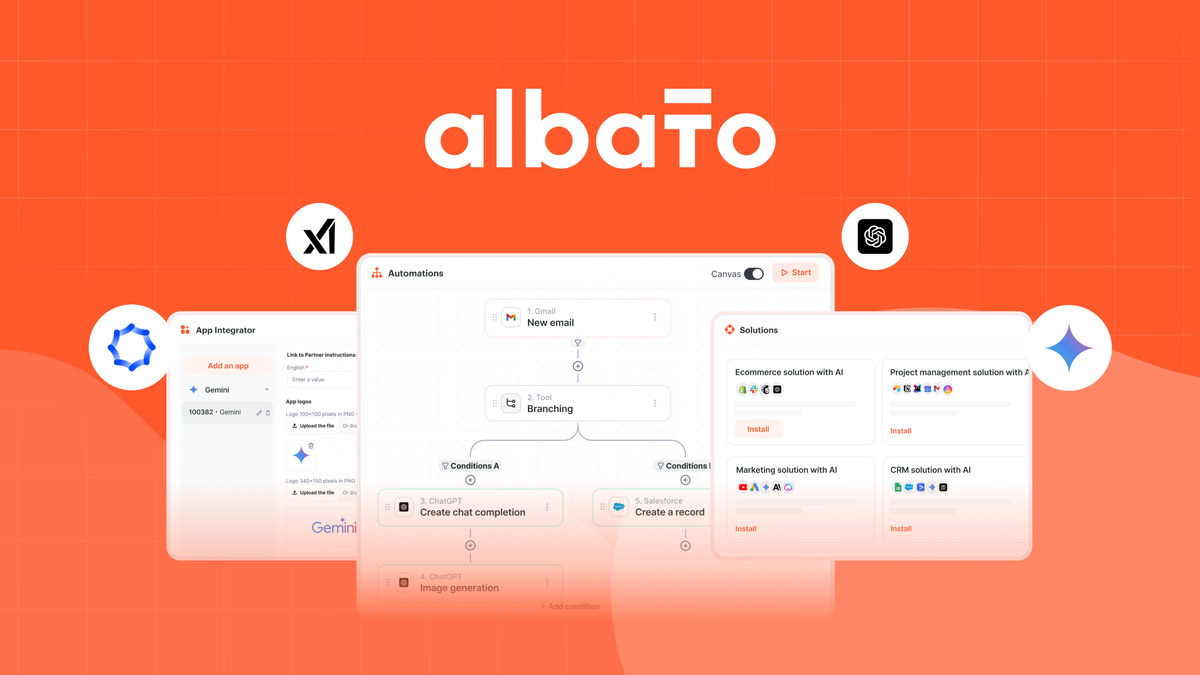
    Integration platforms solve this by creating automated data flows between your various tools. When a new client books a discovery call, that information automatically flows to your CRM, triggers a welcome email sequence, adds them to your project management system, and updates your revenue dashboard. One action, multiple system updates, zero manual intervention.

    The power of proper integration becomes clear when you calculate the compounding minutes. Every client interaction that requires manual updates across three platforms is stealing five to seven minutes from your day. Multiply that by ten clients, five days a week, fifty weeks a year, and you’ve just discovered where an entire month of your time disappears annually.

    But the deeper value isn’t just time recovery—it’s data integrity. Manual data transfer creates opportunities for errors, missed updates, and inconsistent information across systems. These small data discrepancies create big operational problems when you’re trying to scale. Automated integration eliminates these gaps entirely.

    Subscribr: Turning Content Creation From Burden to System
    Subscribr

    [See how Subscribr transforms content workflows]

    Let’s address the content elephant in the room. You know you should be publishing consistently. You understand that content marketing builds authority and attracts ideal clients. You’ve probably even created that detailed content calendar with the best intentions. And then reality hits—actually producing that content becomes another task on an already overwhelming list.

    The traditional advice around content creation assumes you have unlimited creative energy and available time. Just batch your content creation. Just wake up earlier to write. Just outsource to freelancers who don’t understand your voice or methodology. None of these solutions address the core problem: content production is a workflow that demands systematization, not just willpower.

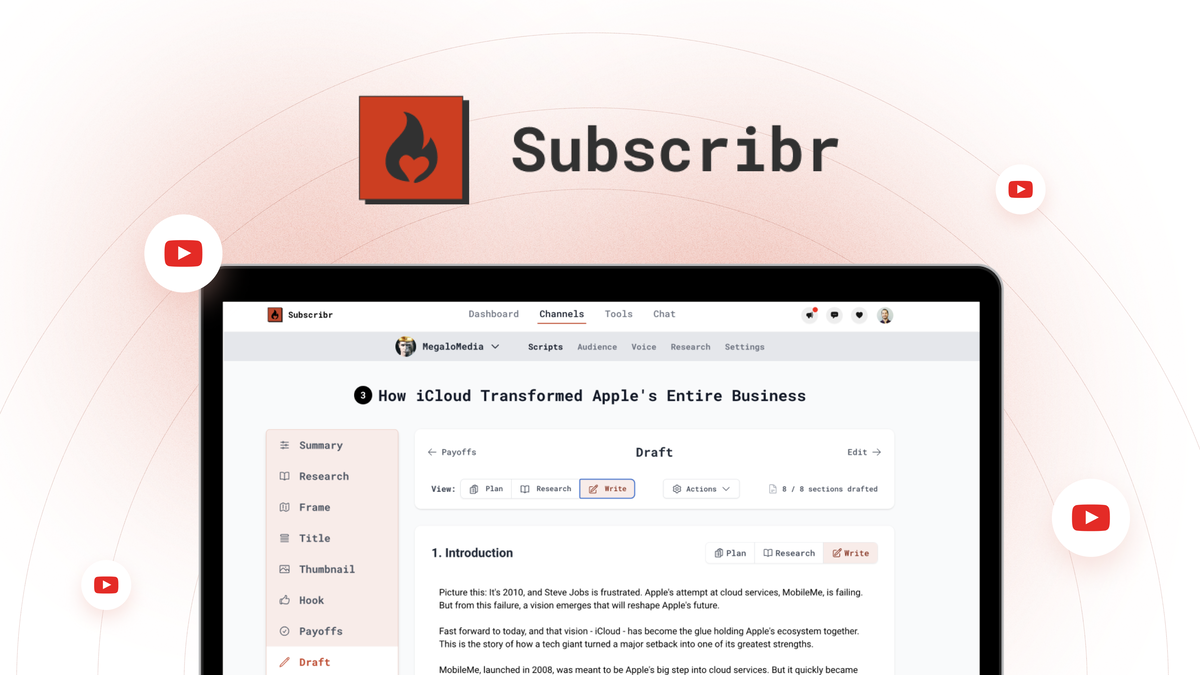
    This is where content automation tools shift the equation. Instead of staring at a blank screen trying to summon creativity on demand, you’re working with systems that help you capture, organize, develop, and distribute your ideas in a repeatable process. The creative work still requires your unique perspective and expertise—but the execution follows a defined pathway rather than relying on inspiration.

    For service-based businesses specifically, consistent content serves a dual purpose. It attracts new prospects while simultaneously positioning you as the obvious choice when they’re ready to buy. But inconsistent publishing—the start-stop pattern most entrepreneurs fall into—actually works against you by signaling unreliability to your audience.

    The strategic advantage of systematized content goes beyond visibility. When your content workflow is automated, you can actually use your published content as part of your sales process. Prospects who engage with your content are demonstrating interest and self-qualifying themselves. Your content becomes both marketing asset and sales tool simultaneously.

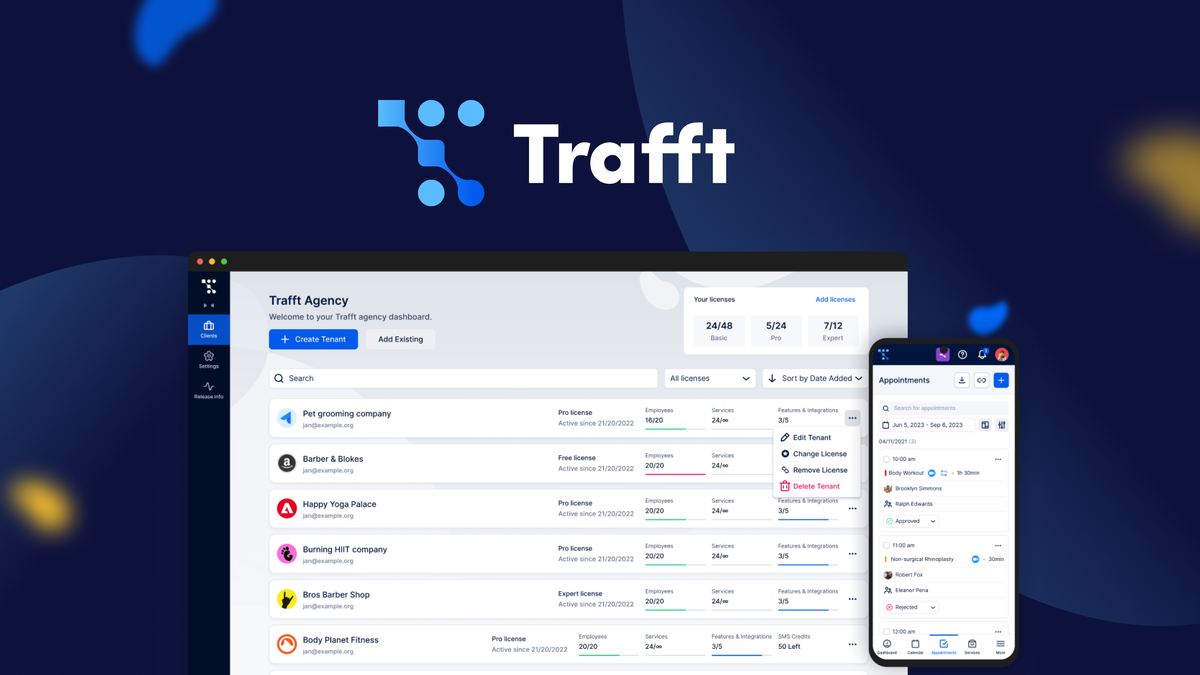
    Trafft: Eliminating the Scheduling Black Hole
    Trafft

    [Discover Trafft’s scheduling automation]

    There’s a special kind of frustration reserved for the back-and-forth email dance of finding a meeting time. It feels productive because you’re communicating with a potential client, but it’s actually one of the most revenue-negative activities in your business. Every message exchange is time spent not serving current clients, not creating content, not developing your methodology, not resting.

    The scheduling chaos multiplies as you grow. What started as a manageable inconvenience with a few clients becomes a legitimate bottleneck when you’re juggling discovery calls, existing client sessions, and strategic partnership meetings. You find yourself constantly checking calendars, sending availability, waiting for responses, rescheduling conflicts, and sending reminders.

    Advanced scheduling automation solves more than just calendar management. It handles the entire appointment lifecycle—from initial booking through confirmation, reminders, rescheduling, and follow-up. More importantly, it integrates with your payment systems, video conferencing platforms, and CRM to create a seamless client experience from first contact through service delivery.

    The hidden value here is psychological on both sides of the transaction. For you, it removes the mental overhead of schedule management from your daily existence. For your prospects and clients, it signals professionalism and systemization—exactly the qualities they want from someone they’re considering hiring.

    Think about the impression you create when a prospect visits your website and can immediately see your availability and book a time that works for them. Compare that to the impression created by email tag over three days trying to find a mutually available slot. Same end result, drastically different experience and perception of your operational sophistication.

    ClickRank: The SEO System That Works While You Sleep
    ClickRank

    [Learn more about ClickRank]

    Search engine optimization carries an intimidating reputation—and for good reason. The traditional approach to SEO feels like learning a foreign language while simultaneously trying to game an algorithm that changes without warning. Most entrepreneurs either ignore it completely or obsess over it to the point of paralysis.

    But here’s what shifts when you understand SEO as a system rather than a mystery: it’s not about tricks or hacks. It’s about consistently creating content that answers the questions your ideal clients are actively searching for, then making that content technically discoverable by search engines. The complexity isn’t in the concept—it’s in the execution and tracking.

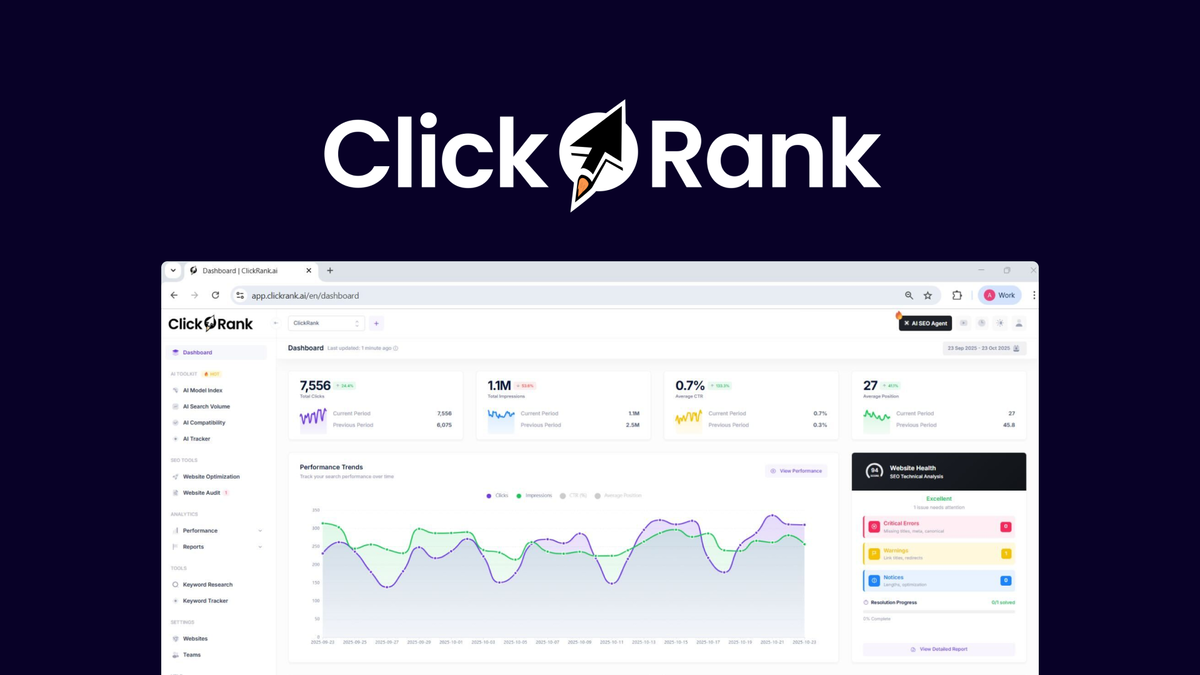
    SEO automation tools solve the execution problem by handling the technical heavy lifting while you focus on creating valuable content. They monitor your rankings, identify opportunities, track competitor strategies, and provide specific recommendations for improvement. Most importantly, they give you data-driven insights instead of guesswork about what’s actually working.

    The strategic value of SEO as a traffic source is its compound effect over time. Paid advertising stops the moment you stop paying. Social media posts disappear into the feed within hours. But properly optimized content continues attracting qualified traffic months and years after you publish it. You’re building an asset that generates returns long after the initial investment of creation.

    For coaches and consultants specifically, SEO creates what nothing else can—qualified prospects who find you at the exact moment they’re searching for the solution you provide. These aren’t cold leads who need nurturing. They’re people actively looking for help, landing on content that demonstrates your expertise, and pre-qualifying themselves based on your methodology and approach.

    The Compounding Effect: How These Systems Work Together

    Understanding each tool individually is valuable. Understanding how they work together as a cohesive system is transformative. The magic happens at the intersection points—where one automated workflow feeds directly into another, creating a seamless client acquisition and service delivery machine.

    Imagine this workflow in action: Your SEO-optimized content attracts a qualified prospect who’s actively searching for your type of solution. They land on your article, consume the value you’ve provided, and click through to learn more about working with you. Your scheduling tool presents available times without requiring any back-and-forth communication. They book a discovery call and immediately receive a confirmation sequence.

    Behind the scenes, your integration platform captures their information and updates multiple systems simultaneously. Your CRM records the new prospect. Your email system triggers a pre-call education sequence. Your project management tool creates a task for your discovery call preparation. Your reporting dashboard updates with the new lead source data.

    On the day of the call, you receive automated reminders and have immediate access to everything you need to know about this prospect. After the call, your RPA system handles the follow-up sequences based on the outcome—proposal delivery, contract generation, onboarding initiation, or nurture sequence enrollment. Every step happens automatically based on the decisions you’ve pre-defined.

    This isn’t just efficiency. This is leverage. You’ve created a system that handles the entire client journey from anonymous website visitor to paying client with minimal manual intervention at each stage. Your role shifts from executing tasks to monitoring system performance and optimizing conversion points.

    The time savings are significant—we’re talking about reclaiming ten to fifteen hours per week that were previously spent on administrative and operational tasks. But the strategic advantage goes deeper than recovered time. You’re removing yourself as the bottleneck in your own business growth.

    Calculating Your Return on Time Investment

    The traditional ROI calculation asks whether a tool’s benefits exceed its costs. But for service-based businesses, there’s a more valuable metric: Return on Time Investment. ROTI measures the value of time recovered through automation against both the financial cost and the opportunity cost of not having that time available for revenue-generating activities.

    Start by honestly tracking how much time you currently spend on the tasks these tools would automate. Not the time you think it takes—the actual time including all the context-switching, interruptions, and mental overhead. For most entrepreneurs, the scheduling chaos alone consumes five to eight hours weekly when you account for the full lifecycle of calendar management.

    Next, calculate what your time is actually worth—not philosophically, but mathematically. Take your target annual revenue and divide it by your available working hours. This is your hourly baseline. Any task you’re doing manually that could be automated at a lower cost than your hourly value is actively preventing you from scaling.

    But the deeper value of time recovery isn’t just doing more client work. It’s having the mental space and actual availability to work on strategic initiatives that compound over time. Building partnerships. Developing new offers. Improving your methodology. Creating leverage points that multiply your impact without multiplying your hours.

    This is where the ROTI calculation becomes transformative rather than just interesting. You’re not just buying back hours. You’re buying back the cognitive bandwidth and creative energy that gets consumed by constant task management and operational firefighting. You’re reclaiming the capacity to think strategically instead of just reacting tactically.

    The Implementation Sequence That Actually Works

    Here’s where most automation initiatives fall apart—trying to implement everything at once. You end up overwhelmed by learning curves, integration challenges, and the disruption of changing multiple workflows simultaneously. The enthusiasm of transformation gets suffocated by the reality of too much change too fast.

    The sequence that actually works starts with identifying your primary bottleneck. Not the most annoying task—the actual constraint that most significantly limits your business growth. For most service-based businesses, this falls into one of three categories: client acquisition chaos, service delivery chaos, or administrative chaos.

    If your bottleneck is client acquisition—you have capacity but struggle to keep your pipeline full—start with the SEO and content systems first. These create the inbound flow that feeds everything else. Your immediate priority is building the visibility that attracts qualified prospects to your ecosystem.

    If your bottleneck is service delivery—you have clients but feel overwhelmed actually serving them—start with scheduling and integration tools first. These remove the operational friction that makes client management feel chaotic. Your immediate priority is creating smooth, systematized experiences that increase client satisfaction while decreasing your stress.

    If your bottleneck is administrative chaos—you’re constantly handling repetitive tasks that don’t require your expertise—start with RPA and integration platforms first. These eliminate the time-consuming busy work that prevents you from focusing on strategic activities. Your immediate priority is reclaiming hours currently lost to administrative quicksand.

    The key insight is this: don’t try to automate your entire business in a weekend. Choose the system that addresses your primary constraint first. Implement it fully. Let it stabilize. Experience the transformation of having that specific chaos point resolved. Then add the next layer.

    This sequential approach creates wins that build momentum rather than change fatigue that creates abandonment. Each successfully implemented system proves the value of automation and builds your confidence in systematic thinking. You’re not just installing tools—you’re fundamentally restructuring how you approach business operations.

    The Black Friday Opportunity: Timing Meets Transformation

    Let’s address the elephant in the room—the timing of this conversation around Black Friday. Yes, these tools are available at significant discounts during this period. But the real opportunity isn’t just saving money on software purchases. The real opportunity is using this moment as the catalyst for the transformation you’ve been postponing.

    Every entrepreneur has that list of “when I have time” projects. Systems you know you should build. Workflows you know you should automate. Infrastructure you know you need but haven’t prioritized because you’re too busy handling the current chaos to prevent future chaos. The irony would be funny if it wasn’t so costly.

    Black Friday creates a forcing function. The limited-time nature of the offers creates urgency, but more importantly, it creates permission. Permission to invest in infrastructure instead of just pushing through with willpower. Permission to prioritize long-term leverage over short-term firefighting. Permission to choose building the engine over continuing to drive the car manually.

    The question isn’t whether these systems would be valuable. You already know they would. The question is whether you’ll use this moment to actually implement them or whether you’ll continue operating in chaos while telling yourself you’ll systematize “someday when things slow down.”

    Here’s the truth about “someday”—it never arrives. Things don’t slow down when you’re running a business on manual workflows. They only get more chaotic as you grow. The systems you don’t build today become exponentially more difficult to implement tomorrow when you have twice the clients, twice the complexity, and half the available bandwidth.

    From Chaos to Predictable Revenue: The Path Forward

    The transformation from chaotic operator to strategic CEO isn’t about working harder or finding more hours in the day. It’s about fundamentally restructuring your role from the person who does all the things to the person who builds the system that does all the things. That shift requires both mindset change and infrastructure investment.

    The five tools we’ve explored represent the essential infrastructure pieces for that transformation. They’re not just productivity apps—they’re the operational foundation of a business that runs predictably, scales sustainably, and creates actual freedom instead of just different flavors of busy-ness.

    Robomotion RPA handles the repetitive digital tasks that consume hours without creating value. Albato connects your various platforms into a cohesive system instead of isolated silos. Subscribr systematizes content production so consistency doesn’t depend on willpower. Trafft eliminates scheduling chaos while improving client experience. ClickRank builds SEO assets that compound over time instead of requiring constant manual effort.

    Together, these systems create the infrastructure that allows you to scale without proportionally scaling your workload. They remove you from the bottleneck position and shift your role from executor to architect. They transform your business from something that demands constant manual intervention to something that runs on systems you’ve designed and can continuously optimize.

    The path forward starts with a decision—not to buy specific tools, but to commit to systematic thinking. To choose infrastructure over hustle. To invest in leverage instead of just grinding harder. The tools are the implementation layer of that decision, not the decision itself.

    So here’s your moment of truth: Will you use this Black Friday as the catalyst for transformation, or will you continue operating in chaos while planning to systematize “someday”? The tools are available. The frameworks are proven. The only question remaining is whether you’re ready to build the engine instead of continuing to manually drive the car.

    The revenue machine you’re capable of building isn’t going to create itself. But with the right infrastructure in place, it also doesn’t require you to sacrifice every waking hour to keep it running. That’s the difference between being busy and being profitable. Between hustling and scaling. Between surviving and thriving.

    Your chaotic workflows aren’t a personality flaw or an unavoidable cost of entrepreneurship. They’re a systems problem waiting for a systems solution. And right now, that solution is not only available—it’s accessible. The only question is whether you’ll choose to implement it.

    Ready to transform your workflows from chaotic to predictable? Explore these tools during Black Friday and start building the revenue machine your business deserves:

    Remember: These aren’t just tools on sale. They’re the infrastructure pieces that convert chaos into predictable revenue systems. The question isn’t whether they’ll create value—it’s whether you’ll implement them before your competition does.


  • Why Your Brilliant Content Attracts Tire Kickers Instead of Dream Clients

    Why Your Brilliant Content Attracts Tire Kickers Instead of Dream Clients

    Why Your Brilliant Content Attracts Tire Kickers Instead of Dream Clients

    You’ve been told the formula a thousand times: create valuable content, solve real problems, give generously, and the right clients will find you. So you’ve done exactly that. You’ve poured hours into thoughtful blog posts, detailed guides, and genuinely helpful resources. You’ve shared your best thinking, your hard-won insights, your proprietary frameworks. And the responses come flooding in—questions, requests for “quick chats,” people wanting to “pick your brain,” inquiries asking if you offer payment plans for your already-reasonable prices.

    Meanwhile, the clients you actually want to work with—the ones with real budgets, clear vision, and respect for expertise—remain mysteriously absent. You watch other professionals in your space working with dream clients while you field another request from someone asking if you can “just tell them how to do it themselves.”

    Here’s what nobody tells you about content marketing: brilliant content doesn’t automatically attract brilliant clients. In fact, the more generous you are with your expertise, the more you risk becoming the go-to resource for people who will never, ever hire you.

    This isn’t about holding back value or playing games with your audience. It’s about understanding a fundamental truth that most content creators miss entirely: the system behind your content matters infinitely more than the content itself.

    The Paradox of Generous Content

    There’s a strange phenomenon happening in the world of content marketing, and it’s wreaking havoc on capable professionals everywhere. Picture this common scenario: You create an incredibly detailed guide walking people through a complex process in your field. You include templates, frameworks, step-by-step instructions—everything someone would need to succeed. The engagement metrics look fantastic. People share it, save it, send thank-you messages about how helpful it was.

    Then crickets when it comes to actual client inquiries. Or worse, inquiries from people who clearly want you to coach them through implementing your free guide rather than hiring you for your actual expertise.

    The paradox is real and maddening: the more comprehensively you solve problems in your content, the less reason you give people to work with you. But the solution isn’t to create worse content or hold back your best ideas. That advice is not only counterintuitive—it’s wrong.

    The real issue runs deeper than content quality. It’s about what your content is actually designed to do. Most professionals create content with a single goal: demonstrate expertise. They believe that if they can just prove how smart they are, how experienced, how generous with their knowledge, the right clients will naturally gravitate toward them.

    This approach attracts exactly one type of person: the learner. The DIY enthusiast. The person who wants to understand how to do what you do so they can attempt it themselves. These aren’t bad people—they’re just not your clients. They’re students looking for a free education, and your content is their textbook.

    What Dream Clients Actually Want

    Here’s where most content strategies go sideways. They operate on the assumption that all readers have the same needs and the same relationship with your expertise. But dream clients—the ones with real budgets and serious commitment—they’re not looking for instructions. They’re looking for confirmation that you understand their specific situation and can deliver the outcome they need.

    Dream clients consume content differently. When someone with a genuine budget reads your blog post, they’re not trying to learn how to do it themselves. They already know they’re not going to DIY this solution. They’re evaluating whether you get it—whether you understand the nuances of their challenge, whether you’ve solved this specific type of problem before, whether you’re the right partner for this journey.

    Tire kickers, on the other hand, are mining your content for actionable steps they can implement on their own. Every detailed how-to becomes another reason they don’t need to hire you. Every framework you share becomes a tool they’ll attempt to use without your guidance. Every template you provide becomes something they’ll customize and deploy independently.

    The fundamental difference isn’t in intelligence or capability—it’s in intent. Dream clients are shopping for the right partner. Tire kickers are shopping for free consulting.

    When your content is structured to educate rather than qualify, you’ve built a beautiful trap. You’re working harder than ever, creating more valuable content than your competitors, and systematically filtering out the exact people you want to work with while rolling out the red carpet for everyone else.

    The Hidden Cost of Being Too Helpful

    Let’s talk about what happens when your content consistently attracts the wrong audience. First, there’s the obvious drain on your time and energy. You spend hours responding to questions from people who will never become clients. You get on discovery calls with individuals who are clearly price shopping or information gathering. You find yourself giving away mini-consultations disguised as “quick questions.”

    But the hidden costs cut deeper.Every hour you spend engaging with tire kickers is an hour you’re not spending on activities that would attract dream clients. Every piece of content designed to educate the masses is a piece of content that’s not speaking directly to the specific fears, aspirations, and circumstances of your ideal client.

    There’s also a positioning problem that develops over time. When your audience consists primarily of DIY enthusiasts and bargain hunters, that’s who shares your content, that’s who engages with your posts, that’s who fills your comments sections and inbox. And guess what? Dream clients notice. They’re evaluating not just your expertise but your client base. If they see your content surrounded by questions that signal “I’m trying to avoid hiring someone,” they draw conclusions about who you typically work with.

    Premium buyers want to work with premium service providers. They’re looking for signals that you work with clients like them—people who value expertise, invest properly in solutions, and expect premium outcomes. When your content ecosystem is dominated by freebie seekers, you’ve accidentally signaled that you’re not operating at the level dream clients are shopping for.

    The Psychology of Premium Buyers

    Understanding how dream clients think changes everything about how you approach content. Premium buyers operate from a completely different psychological framework than bargain hunters. They’re not comparing your prices to your competitors’ prices—they’re evaluating the cost of not solving the problem versus the investment in solving it properly.

    When dream clients encounter your content, they’re running a sophisticated evaluation process. They’re asking: Does this person understand the real complexity of what I’m dealing with? Have they worked with situations like mine? Do they approach this challenge with the level of sophistication it deserves? Can they see the nuances I’m worried about?

    They don’t need you to teach them how to do what you do—they need you to demonstrate that you can do it better than they ever could. They need evidence that you’ve developed systems, frameworks, and approaches that would take them years to figure out on their own. They need to feel confident that hiring you is the smart, efficient path forward.

    This is why the most effective content for attracting dream clients often feels counterintuitive. It doesn’t explain everything. It doesn’t provide step-by-step instructions. Instead, it reveals complexity, illuminates challenges, exposes hidden variables, and demonstrates depth of thinking. It makes the prospect realize: “This is more nuanced than I thought, and this person clearly has this dialed in.”

    Meanwhile, this same content does something equally important—it deters tire kickers. When you focus on complexity, systems thinking, and sophisticated approaches rather than simple how-tos, people looking for a quick DIY solution self-select out. They recognize that what you do requires more depth than they’re prepared to invest in learning.

    From Content Creator to System Architect

    The shift from attracting tire kickers to attracting dream clients requires a fundamental reorientation of how you think about content. You’re not a content creator—you’re a system architect designing a qualification mechanism that filters and attracts simultaneously.

    Think about your content ecosystem as a series of gates and bridges. Each piece of content should serve a specific function in moving the right people closer to working with you while making it clear to the wrong people that they’re not a fit. This isn’t about being exclusive for the sake of exclusivity—it’s about respecting everyone’s time, including your own.

    A well-designed content system does several things at once. It demonstrates expertise without giving away the implementation. It reveals your thinking process without providing the complete roadmap. It addresses sophisticated challenges that your ideal clients face without trying to appeal to everyone. It creates moments of recognition where dream clients think “Finally, someone who gets it” while tire kickers think “This is more complex than I want to deal with.”

    This requires you to get comfortable with the idea that not every piece of content needs to be maximally helpful to the maximum number of people. In fact, content that tries to help everyone equally ends up serving no one well. Your dream clients don’t need surface-level advice that applies to anyone. They need depth, specificity, and sophisticated thinking that applies to their particular situation.

    Consider the difference between content that says “Here’s how to do X” versus content that says “Here’s why X is more complex than most people realize, and the five variables that determine whether you should approach it this way or that way.” The first approach attracts people who want instructions. The second attracts people who want expertise.

    The Structure of Pre-Qualifying Content

    Content that pre-qualifies dream clients has a different architecture than educational content. It focuses on frameworks rather than formulas, on principles rather than processes, on thinking rather than tactics. It reveals your methodology without providing a manual. It demonstrates mastery by showing the nuance and complexity you navigate, not by simplifying everything into easy steps.

    Imagine if your content asked more questions than it answered. Not rhetorical questions, but genuine inquiry that prompts reflection: What would it mean for your business if this challenge were truly solved? What’s the cost of continuing to approach this the way you have been? What would become possible if you had the right system in place?

    These questionsdo something tactical how-to content never can—they shift readers from learning mode to evaluation mode. They stop mining your content for free answers and start considering whether this is a problem they want to solve properly. They begin seeing you not as a teacher but as a potential partner.

    Pre-qualifying content also speaks directly to the specific circumstances of your ideal clients. Instead of generic advice that could apply to anyone, it addresses the particular challenges, contexts, and aspirations of the people you want to work with. When a dream client reads it, they should feel like you’re speaking directly to them. When a tire kicker reads it, they should feel like it’s not quite relevant to their situation.

    This specificity does something powerful—it makes dream clients feel seen and understood while making tire kickers self-select out. You’re not rejecting anyone; you’re simply being clear about who you’re for and who you’re not for.

    The Mindset Shift That Changes Everything

    Here’s the uncomfortable truth most professionals need to confront: if you’re attracting mostly tire kickers, it’s because your content system is designed to attract them, whether you intended that or not. The DIY enthusiasts and bargain hunters aren’t showing up by accident. They’re responding to exactly what you’re offering—comprehensive how-to content that helps them avoid hiring someone.

    Shifting this pattern requires getting honest about what you actually want your content to accomplish. Is the goal to be helpful to as many people as possible? Or is the goal to attract and convert dream clients who will invest properly in solving their challenges?

    These aren’t the same objective, and they require completely different approaches. Being maximally helpful to the masses often means being minimally effective at attracting premium clients. You can certainly choose the first path—there’s nothing wrong with being an educator or thought leader who gives everything away. But don’t be surprised when your audience consists primarily of learners rather than buyers.

    The mindset shift happens when you realize that serving your ideal clients means sometimes disappointing everyone else. It means creating content that doesn’t try to appeal to the broadest possible audience. It means being willing to have smaller engagement numbers if those engaging are the right people. It means prioritizing depth over reach, specificity over general appeal.

    This shift requires confidence in your positioning. You have to believe that the right clients exist, that they’re looking for someone like you, and that you serve them better by speaking directly to them rather than trying to be all things to all people. That confidence doesn’t come from hoping—it comes from building systems that consistently attract and qualify the clients you want to work with.

    Building Your Client Attraction System

    Understanding why your brilliant content attracts the wrong people is just the first step. The real work is designing a system that flips the script—that naturally attracts dream clients while respectfully filtering out those who aren’t a fit. This isn’t about a single blog post or lead magnet or sales page. It’s about how all your content works together to guide the right people toward working with you.

    A proper client attraction system has layers. The public-facing content establishes authority and speaks to the specific challenges your ideal clients face. The next layer reveals your methodology and thinking process without giving away implementation details. Another layer creates opportunities for dream clients to self-identify and take next steps. And the final layers systematically qualify prospects while building confidence that you’re the right choice.

    Each layer serves a purpose. Each piece of content has a job to do beyond “provide value.” The system works because it’s intentionally designed to move the right people forward while making it clear to the wrong people that this isn’t for them. There’s no manipulation here—just clarity about who you serve and how you serve them.

    The most effective client attraction systems are built on the understanding that dream clients and tire kickers need completely different experiences. Dream clients need to see sophistication, proven methodology, and evidence that you’ve solved problems like theirs. Tire kickers need to find someone else who’s a better fit for what they’re actually looking for—which is usually education rather than implementation.

    Moving Forward With Intention

    If you’re recognizing yourself in this exploration—if you’ve been creating generous, helpful content that’s attracting all the wrong people—know that you’re not alone. This is one of the most common and frustrating challenges facing skilled professionals who understand the value of content marketing but haven’t yet cracked the code on making it work for their business.

    The good news is that this is entirely fixable. You don’t need to start over. You don’t need to abandon content marketing. You don’t need to stop being helpful or generous with your expertise. You need to approach your content with a different lens—as a system designed to attract and qualify, not just to educate and engage.

    This shift requires rethinking what success looks like. It’s not about reach or engagement metrics. It’s not about how many people read your posts or download your resources. It’s about whether the right people are moving toward working with you. It’s about whether your content is creating a clear path for dream clients while respectfully redirecting everyone else.

    The professionals who master this—who build content systems that consistently attract premium clients—they’re not necessarily creating more content or better content than you. They’re creating strategically designed content that serves a specific purpose in a larger system. Every piece works together to guide the right people forward.

    Your brilliant content can absolutely attract brilliant clients. But only when it’s structured as part of a system designed for that purpose. Only when it speaks specifically to dream clients rather than trying to help everyone. Only when you shift from content creator to system architect.

    The question isn’t whether you have the expertise or whether your content is valuable. The question is whether you’re ready to build a system that puts your expertise to work attracting the clients you actually want to serve. Because once you make that shift, everything changes. The tire kickers find someone else. And the dream clients finally find you.

    Ready to Transform Your Content Into a Client Attraction System?

    If you’re done attracting tire kickers and ready to build a system that brings dream clients to your door, explore the frameworks and resources designed specifically for professionals who are ready to make this shift. Visit our Resources page to discover the strategic approach that changes everything about how content works for your business.

  • The Strategic Coach’s Blueprint to GenAI Content Systems

    The Strategic Coach’s Blueprint to GenAI Content Systems

    THE STRATEGIC COACH’S BLUEPRINT TO GEN-AI CONTENT SYSTEMS

    Introduction: Breaking Free from the Content Hamster Wheel

    Picture this scenario: You wake up Monday morning, and instead of dreading the week’s content calendar, you feel confident knowing your system is already working. Your AI-enhanced content pipeline is generating ideas, your workflows are producing quality pieces, and leads are flowing in from prospects who genuinely connect with your expertise.

    This isn’t a fantasy—it’s the reality for strategic coaches who’ve made the crucial shift from chaotic content creation to systematic approaches powered by artificial intelligence.

    Most coaches find themselves trapped in what we call the “content hamster wheel”—constantly running, producing endless posts, chasing algorithms, and burning out while wondering why their content isn’t generating quality leads. The problem isn’t lack of expertise or work ethic. The problem is approaching content creation as a manual, reactive process rather than a strategic system.

    The Hidden Cost of Content Chaos

    When content creation operates without systems, several problems compound:

    • Time Displacement: Hours spent on content steal time from high-value coaching and strategy work

    • Quality Inconsistency: Rushed content fails to showcase your expertise effectively

    • Strategy Dilution: Reactive posting weakens your positioning and message clarity

    • Energy Drain: Constant content pressure creates mental fatigue that affects all business areas

    • Lead Quality Degradation: Desperate content attracts tire-kickers rather than ideal clients

    What You’ll Master in This Blueprint

    This guide reveals the systematic approach that transforms content creation from a burden into an asset. You’ll discover how to leverage AI tools strategically while maintaining your authentic voice, create workflows that scale without proportional time increases, and measure success through metrics that actually drive business growth.

    The methodology centers on three core principles: systematic thinking over reactive posting, strategic AI integration over tool addiction, and lead quality focus over vanity metrics obsession.

    Chapter 1: The Foundation – Systematic Thinking for Content Success

    Understanding the System Mindset Shift

    The difference between successful content creators and those stuck on the hamster wheel lies in fundamental thinking approaches. Strategic coaches who win with content think in systems, not individual posts.

    🧠 MINDSET REFRAME

    From: “What should I post today?”
    To: “What system can create valuable content consistently?”

    From: “How do I get more followers?”
    To: “How do I attract my ideal clients systematically?”

    From: “What’s trending right now?”
    To: “What evergreen value can I systematize?”

    The Three Pillars of Strategic Content Systems

    Pillar 1: Value Architecture

    Instead of creating random content, systematic coaches build what we call “value architecture”—a structured approach to sharing expertise that builds logical progressions for prospects. This means organizing your knowledge into teachable frameworks, repeatable processes, and scalable insights.

    Imagine if every piece of content you created reinforced a central framework or methodology. Prospects begin recognizing your systematic approach to solving their problems, which naturally positions you as the strategic solution rather than just another advice-giver.

    Pillar 2: Process Optimization

    Systematic content creators focus intensely on process efficiency. Rather than starting from scratch each time, they build workflows that handle ideation, creation, optimization, and distribution with minimal manual intervention.

    This pillar recognizes that content creation energy should focus on strategic decisions and quality control, not repetitive tasks that can be systematized or AI-enhanced.

    Pillar 3: Performance Intelligence

    The third pillar involves measuring what actually matters for business growth. Instead of vanity metrics like likes or followers, systematic coaches track metrics that correlate with revenue: lead quality, conversion rates, and client acquisition costs through content channels.

    Diagnostic: Assessing Your Current Content Approach

    📊 CONTENT SYSTEM ASSESSMENT

    Rate each area from 1-5 (1 = Non-existent, 5 = Fully Systematic):

    • Content planning and ideation process: ___

    • Creation workflow efficiency: ___

    • Voice and message consistency: ___

    • Distribution automation: ___

    • Performance measurement: ___

    • Lead generation effectiveness: ___

    • Time investment sustainability: ___

    Scoring:
    28-35: Strong foundation, ready for AI enhancement
    21-27: Good potential, needs workflow optimization
    14-20: Moderate systems, requires strategic overhaul
    7-13: Minimal systems, perfect for complete transformation

    Chapter 2: Strategic AI Integration – Tools as Force Multipliers

    The AI Integration Philosophy

    The key to successful AI integration lies in understanding that artificial intelligence should amplify your expertise, not replace your thinking. Strategic coaches use AI as a force multiplier—a tool that makes their unique insights more scalable and efficient to share.

    The common mistake involves either AI avoidance (missing significant efficiency gains) or AI over-dependence (losing authentic voice and strategic thinking). The strategic approach treats AI as a sophisticated assistant that handles routine cognitive tasks while you focus on high-level strategy and authentic connection.

    The Strategic AI Stack

    Layer 1: Ideation and Research Enhancement

    AI excels at helping generate content angles, research supporting points, and identify knowledge gaps in your content approach. Rather than staring at blank screens or recycling old ideas, you can prompt AI to explore different perspectives on your expertise areas.

    Strategic coaches use AI to brainstorm content series, identify audience pain points they haven’t addressed, and explore new ways to explain familiar concepts. The key is providing context about your methodology and audience so AI suggestions align with your strategic positioning.

    Layer 2: Draft Creation and Structure

    AI can rapidly create content outlines, first drafts, and structural frameworks that you then refine with your expertise and voice. This dramatically reduces the “blank page” problem while ensuring you maintain control over strategic messaging.

    The workflow typically involves feeding AI your topic, key points, and target outcome, receiving a structured draft, then editing for voice, accuracy, and strategic alignment. This approach can reduce initial creation time by 60-80% while maintaining content quality.

    Layer 3: Optimization and Adaptation

    AI tools can adapt single pieces of content across multiple formats and platforms while maintaining core messages. A single strategic insight can become a LinkedIn post, email newsletter section, Twitter thread, and video script through intelligent adaptation.

    This layer handles the tactical work of format optimization, platform-specific adjustments, and audience-appropriate language while preserving your strategic intent.

    Implementation Workflow

    🔧 THE STRATEGIC AI CONTENT WORKFLOW

    Step 1: Strategic Input

    • Define your core message or teaching point

    • Identify target audience and their current challenge

    • Clarify desired outcome from this content piece

    Step 2: AI-Enhanced Ideation

    • Use AI to explore different angles and approaches

    • Generate multiple outline options

    • Identify supporting examples and analogies

    Step 3: Collaborative Creation

    • AI creates structural draft based on your strategic input

    • You refine for voice, accuracy, and positioning

    • AI assists with optimization and clarity improvements

    Step 4: Multi-Format Adaptation

    • AI adapts core content for different platforms

    • You review for strategic consistency

    • Final approval ensures brand alignment

    Maintaining Authenticity with AI

    The concern about losing authentic voice through AI assistance is valid but manageable through strategic approaches. Your authenticity comes through your unique perspectives, experiences, and methodologies—elements that you bring to the AI collaboration.

    Successful coaches develop “voice guides” that help AI match their communication style, incorporate personal frameworks consistently, and maintain strategic positioning throughout all content. The goal is efficiency without losing the human insight that makes your content valuable.

    Chapter 3: Building Scalable Content Workflows

    The Scalability Challenge

    Traditional content creation doesn’t scale efficiently. Doubling content output typically requires doubling time investment, which is unsustainable for strategic coaches whose highest value lies in client work and business development.

    Scalable workflows solve this by creating systems where increased output requires minimal additional time investment. The secret lies in modular thinking, template development, and strategic automation.

    The Modular Content Architecture

    Core Content Modules

    Instead of creating each piece of content independently, strategic coaches develop core content modules—comprehensive treatments of specific topics that can be adapted across multiple formats and contexts.

    Picture this approach: You invest time creating a thorough exploration of a key concept in your methodology. This becomes your “master module” that can generate multiple social media posts, email sequences, video scripts, and workshop segments. One deep thinking session produces weeks of content materials.

    Template Systems

    Effective workflows rely on templates that maintain quality and consistency while reducing decision fatigue. These aren’t rigid formulas but flexible structures that guide creation while preserving creativity.

    📝 STRATEGIC CONTENT TEMPLATES

    Problem-Solution Framework:

    • Identify specific challenge your audience faces

    • Explain why traditional approaches fall short

    • Present your strategic alternative

    • Provide actionable implementation step

    • Connect to broader methodology

    Insight-Application Framework:

    • Share strategic insight or principle

    • Provide real-world application context

    • Address common implementation obstacles

    • Offer specific next steps

    • Link to additional resources

    Story-Lesson Framework:

    • Brief situational context

    • Key learning or realization

    • Broader principle or strategy

    • Application for audience

    • Invitation for engagement

    The Batch Processing Approach

    Scalable workflows utilize batch processing—handling similar tasks in concentrated time blocks rather than switching between different types of work constantly.

    Strategic coaches might spend one focused session per month generating core content modules, another session adapting these for various platforms, and a third session scheduling and optimizing distribution. This approach minimizes context-switching costs and maximizes deep work benefits.

    Automation Integration Points

    Distribution Automation

    Once content is created and approved, distribution should happen automatically. This includes social media scheduling, email sequence integration, and cross-platform syndication. The goal is ensuring your content reaches intended audiences without ongoing manual intervention.

    Performance Tracking Automation

    Automated performance tracking ensures you receive meaningful data about content effectiveness without manual data compilation. This includes lead attribution, engagement quality assessment, and conversion tracking through content touchpoints.

    Follow-up Sequence Automation

    When content generates leads or engagement, automated follow-up sequences can nurture these prospects while you focus on high-value activities. This might include email sequences, resource delivery, or qualification processes that run independently.

    Chapter 4: Lead Quality Focus – Measuring What Matters

    Beyond Vanity Metrics

    The content marketing industry obsesses over metrics that rarely correlate with business success. Likes, shares, and follower counts might indicate reach, but they don’t necessarily translate to revenue or client acquisition.

    Strategic coaches need measurement approaches that connect content efforts to business outcomes. This requires shifting focus from attention metrics to conversion metrics, from volume indicators to quality indicators.

    The Strategic Measurement Framework

    Tier 1: Engagement Quality

    Rather than measuring total engagement, focus on engagement quality indicators:

    • Comment Quality: Are responses thoughtful questions or simple reactions?

    • DM Conversion: How many social media interactions lead to private conversations?

    • Time Investment: Do people spend time consuming your content or quickly scroll past?

    • Share Context: When people share your content, do they add thoughtful commentary?

    Tier 2: Lead Generation Metrics

    This tier focuses on how effectively content converts attention into business opportunities:

    • Lead Velocity: How quickly does content generate new prospect conversations?

    • Lead Quality Score: How well do content-generated leads match your ideal client profile?

    • Conversion Timeline: How long from content engagement to sales conversation?

    • Attribution Accuracy: Which content pieces most effectively drive qualified prospects?

    Tier 3: Business Impact Metrics

    The ultimate measurement focuses on revenue and business growth indicators:

    • Client Acquisition Cost: How much content investment is required to acquire new clients?

    • Revenue Attribution: What revenue can be directly traced to content marketing efforts?

    • Client Quality: Do content-sourced clients tend to be higher or lower value?

    • Referral Generation: How effectively does content inspire client referrals?

    ⚠️ MEASUREMENT WARNING

    Avoid the “measurement trap” where tracking becomes more time-consuming than content creation itself. Focus on 3-5 key metrics that directly correlate with your business goals, and automate data collection wherever possible.

    Creating Your Measurement Dashboard

    Effective measurement requires simple, automated dashboards that provide quick insights without overwhelming complexity. Your dashboard should answer three questions weekly:

    1. Is my content reaching the right audience?

    2. Is my content generating qualified leads?

    3. Is my content contributing to revenue growth?

    Everything else is secondary information that shouldn’t drive daily decisions or consume significant time for analysis.

    Chapter 5: Implementation Roadmap

    Phase 1: Foundation Building (Days 1-10)

    Week 1: Strategic Assessment and Planning

    🎯 WEEK 1 IMPLEMENTATION CHECKLIST

    Day 1-2: Current State Analysis

    • Complete content system assessment from Chapter 1

    • Document current content creation time investment

    • Identify top 3 content-related frustrations

    • List existing content that performed well

    Day 3-4: Strategic Planning

    • Define your core methodology or framework

    • Identify 5 key topics that showcase your expertise

    • Clarify your ideal client characteristics

    • Set specific lead generation goals through content

    Day 5-7: Tool Selection and Setup

    • Research and select primary AI tools for content creation

    • Set up basic automation tools for distribution

    • Create measurement tracking systems

    • Establish content storage and organization systems

    Phase 2: System Development (Days 11-20)

    Content Architecture Development

    During this phase, you’ll build the structural elements that make your system scalable and sustainable.

    Core Module Creation: Develop your first master content module using the frameworks from Chapter 3. This should be a comprehensive treatment of one key topic that demonstrates your expertise and provides genuine value.

    Template Customization: Adapt the strategic content templates to match your voice, methodology, and audience preferences. These become your efficiency tools for consistent creation.

    Workflow Design: Create your specific workflow for moving from idea to published content, incorporating AI tools and automation at appropriate points.

    Phase 3: Testing and Optimization (Days 21-30)

    System Validation

    The final phase focuses on testing your system under real conditions and making necessary adjustments before full implementation.

    Content Production Testing: Use your new system to create and publish content for one week, measuring both efficiency gains and quality maintenance.

    Audience Response Analysis: Monitor how your systematically-created content performs compared to previous approaches, focusing on engagement quality rather than quantity.

    Workflow Refinement: Identify bottlenecks, unnecessary steps, or missing elements in your system and make appropriate adjustments.

    🚀 30-DAY SUCCESS INDICATORS

    Efficiency Gains:

    • 50% reduction in content creation time

    • Consistent daily content production without stress

    • Clear pipeline of content ideas for next 30 days

    Quality Improvements:

    • More strategic alignment in all content pieces

    • Consistent voice and messaging

    • Higher engagement quality from target audience

    Lead Generation:

    • Increased qualified prospect conversations

    • Clearer connection between content and client inquiries

    • Improved lead quality scores

    Chapter 6: Resource Library and Tools

    Essential AI Tools for Strategic Coaches

    Content Creation Tools

    Primary AI Writing Assistants: Tools that help with ideation, drafting, and editing while maintaining your strategic voice and expertise positioning.

    Content Adaptation Tools: Platforms that can transform long-form content into multiple shorter formats suitable for different social media channels and marketing contexts.

    Research and Ideation Tools: AI-powered platforms that help identify trending topics, audience questions, and content gaps in your market space.

    Automation and Workflow Tools

    Content Scheduling Platforms: Tools that handle multi-platform content distribution while maintaining optimal timing and frequency.

    Lead Capture and Tracking Tools: Systems that connect content engagement to lead generation and provide attribution analytics.

    Workflow Management Platforms: Tools that help orchestrate the entire content creation process from ideation through publication and performance analysis.

    Template Library

    📋 STRATEGIC CONTENT TEMPLATES

    LinkedIn Thought Leadership Post:

    • Hook: Contrarian or insightful opening

    • Context: Brief situation or challenge

    • Insight: Your strategic perspective

    • Application: How readers can implement

    • Engagement: Question or call to action

    Email Newsletter Section:

    • Subject tie-in: Connect to newsletter theme

    • Value delivery: Specific insight or tool

    • Personal connection: Brief authentic element

    • Next step: Clear action or resource

    Video Script Outline:

    • Opening hook: Attention-grabbing statement

    • Problem identification: Audience pain point

    • Solution framework: Your methodology

    • Implementation guidance: Specific steps

    • Call to action: Next engagement opportunity

    Measurement Tools and Dashboards

    Performance Tracking

    Engagement Analytics: Tools that go beyond surface metrics to measure engagement quality and audience sentiment.

    Lead Attribution Systems: Platforms that connect content touchpoints to sales conversations and revenue generation.

    ROI Calculation Tools: Systems that help determine the financial return on content marketing investments.

    Dashboard Templates

    Simple tracking sheets and dashboard templates that focus on the metrics that matter most for strategic coaches building lead generation through content systems.

    Chapter 7: Advanced Strategies and Scaling

    Content Ecosystem Development

    Once your basic system is operational, the next level involves creating content ecosystems—interconnected content pieces that work together to guide prospects through your expertise and toward sales conversations.

    The Hub and Spoke Model

    This approach treats comprehensive pieces (like guides, workshops, or detailed frameworks) as “hubs” that anchor your expertise demonstration. “Spoke” content pieces then reference, expand upon, or direct traffic back to these hub pieces.

    Imagine creating a comprehensive framework for business strategy (hub), then generating dozens of social media posts, email segments, and short videos that each explore different aspects of this framework while directing interested prospects back to the complete resource.

    Sequential Content Series

    Rather than treating each content piece as independent, advanced practitioners create series that build upon each other, gradually educating prospects about their methodology while demonstrating expertise depth.

    These series work particularly well for complex strategic concepts that can’t be fully explained in single posts but need multiple touchpoints to properly communicate value.

    Personalization at Scale

    Advanced AI integration allows for content personalization without proportional time increases. This involves creating content variations that speak to different segments of your audience while maintaining your core strategic messaging.

    Audience Segmentation Strategies

    Strategic coaches often serve multiple types of clients or prospects at different business stages. Advanced systems can automatically adapt content for these different segments while preserving efficiency gains.

    For example, the same strategic insight might be presented differently for startup entrepreneurs versus established business owners, with AI handling the adaptation while you maintain oversight of strategic positioning.

    System Evolution and Optimization

    Mature content systems evolve based on performance data and changing market conditions. This involves regular system audits, workflow optimization, and strategic pivots based on what’s working most effectively.

    Quarterly System Reviews

    Every quarter, successful practitioners conduct comprehensive reviews of their content systems, analyzing what’s working, what needs adjustment, and where new opportunities exist for improvement or expansion.

    These reviews focus on business impact rather than activity metrics, ensuring the system continues serving strategic business goals rather than becoming an end in itself.

    Conclusion: From Implementation to Mastery

    The Transformation Journey

    The shift from chaotic content creation to systematic approaches represents more than operational improvement—it’s a strategic transformation that affects how you position your expertise, engage with prospects, and scale your business.

    Most coaches who implement these systems report not just time savings, but increased confidence in their content, clearer positioning in their market, and improved lead quality from their marketing efforts. The systematic approach forces clarity about value proposition and target audience in ways that benefit all business areas.

    Key Success Factors

    Commitment to Systems Thinking: The biggest factor in successful implementation is genuinely embracing systems thinking over reactive approaches. This requires initial discipline but creates long-term freedom.

    Strategic AI Integration: Success comes from treating AI as a sophisticated tool that amplifies your expertise rather than replacing your strategic thinking. The human insight remains central while AI handles efficiency improvements.

    Focus on Lead Quality: Maintaining focus on business outcomes rather than vanity metrics ensures your content system serves strategic business goals rather than becoming a time-consuming distraction.

    🎯 YOUR NEXT STEPS

    Immediate Actions (This Week):

    • Complete the content system assessment

    • Identify your biggest content creation frustration

    • Research and test one AI tool for content assistance

    • Document your current time investment in content

    30-Day Implementation:

    • Follow the Phase 1-3 implementation roadmap

    • Create your first master content module

    • Establish measurement systems for meaningful metrics

    • Test and refine your workflow processes

    Ongoing Optimization:

    • Conduct monthly system performance reviews

    • Continuously refine AI integration approaches

    • Scale successful content formats and topics

    • Measure and improve lead quality through content

    The Strategic Advantage

    Coaches who master systematic content creation gain significant competitive advantages. While competitors struggle with content consistency and burn themselves out trying to keep up with platform demands, you’ll have predictable systems generating quality leads while you focus on high-value client work.

    This isn’t about creating more content—it’s about creating more strategic, effective content with less time investment and stress. The goal is sustainable lead generation that supports business growth without consuming your strategic focus or personal energy.

    Beyond Content: Building Strategic Systems

    The principles in this blueprint extend beyond content creation. The systematic thinking, AI integration strategies, and outcome-focused measurement approaches apply to many aspects of strategic coaching businesses.

    As you master content systems, you’ll likely find opportunities to apply similar systematic approaches to client onboarding, service delivery, and business development processes. The content system becomes a foundation for broader business optimization.

    The journey from content chaos to systematic success requires initial investment of time and attention, but the long-term payoff includes not just operational efficiency but strategic clarity, improved positioning, and sustainable business growth through predictable lead generation.

    Your expertise deserves systematic amplification. Your prospects need consistent access to your insights. Your business requires sustainable marketing systems that work while you focus on highest-value activities. This blueprint provides the roadmap for achieving all three outcomes simultaneously.